
Looking at Plaid (https://plaid.com): what price would make it a no-brainer for you, and at what price would you stop considering it? What would you expect to get for that money? Also say the maximum you would pay per month in USD (0 if nothing).
Page reviewed
Plaid: Enabling all companies to build fintech solutions
https://plaid.com/ (opens in a new tab)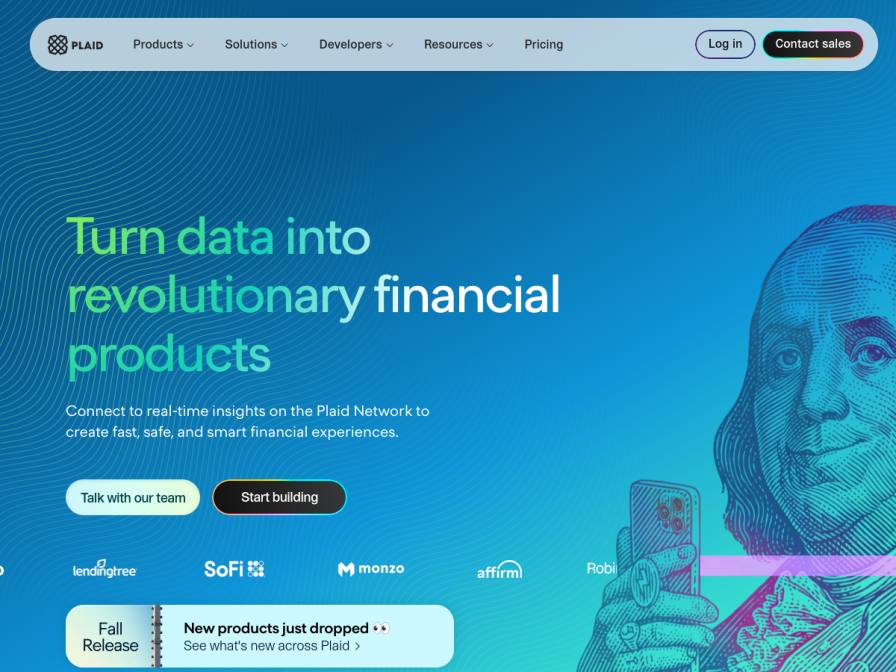
10 fictional AI personas. Exploratory perspectives, not a survey of real customers. Methodology & limitations
Simulated interest
AI synthesis, not measured demand
Suggested price range
Median $300 · simulated willingness to pay
Response sentiment
What this panel suggests
These synthetic responses show moderate-to-strong interest in Plaid’s core job-to-be-done: connecting apps to bank accounts. The biggest friction is pricing opacity. Several respondents said they could not even name a stop price because the page does not show public tiers and routes people to sales, making it hard to judge value. The available willingness-to-pay answers cluster around $150-$500/month, with a median of $300/month, which suggests a plausible self-serve starting point if packaging were transparent. What buyers expect for that money is dependable documentation, reliable uptime, and straightforward integration. A second concern is regional coverage: some respondents want proof that Plaid works well with European or other non-US banks. That is a perception gap, not a verified product limitation, because the page claims coverage across 20 countries and 12,000 financial institutions. Overall, the reaction is curiosity rather than rejection, but buyers want clearer pricing and clearer proof of coverage.
Pricing & positioning
Hypothesis: Plaid would benefit from clear self-serve tiers or a published starting price, because several respondents could not name a stop price when pricing was hidden behind sales. Based on the available WTP answers, a transparent entry tier around $150-$300/month looks like the most plausible 'no-brainer' zone, with $500/month near the upper edge for this batch.
The main barrier is not outright rejection, but uncertainty created by opaque pricing.Buyers appear to expect reliable bank connectivity, good documentation, strong uptime, and straightforward integration for the money.Some respondents want verification of non-US bank coverage before committing, even though the page claims coverage across 20 countries and 12,000 financial institutions.
Recurring themes
“The Plaid pricing page itself isn't visible, so I can't get specific numbers.”Read Francis Batz’s response →
“I'd expect robust documentation, reliable uptime, and straightforward integration for that price.”Read Francis Batz’s response →
“I'd need proof that Plaid handles regional banks robustly.”Read Tarun Patil’s response →
Objections to investigate
- Lack of public pricing data
- Unclear value proposition without specifics
- Regional bank compatibility uncertainty
Use these findings to plan customer interviews or experiments. How to interpret AI research
What the panel said
Click a name to open that persona’s full profile.
Francis BatzneutralThe Plaid pricing page itself isn't visible, so I can't get specific numbers. However, for a service like this, which promises to handle bank connections for onboarding and reconciliation, a no-brainer price point would be around $50-75 per month. This would cover basic API access and a reasonable number of monthly transactions for our four-person startup. Anything above $150 per month would start to feel like a significant investment, especially when we're focused on capital efficiency. I'd expect robust documentation, reliable uptime, and straightforward integration for that price.
Simulated interest: 60/100
Delores ReynoldsneutralPlaid's website doesn't offer clear pricing structures for their various products, which is a significant hurdle. I'd need to understand their pricing basis – is it per API call, per connected account, per active user, or a tiered subscription? For a startup like ours, a "no-brainer" price would likely be in the range of $500-$1,000 per month, assuming it covers a substantial volume of connections and offers reliable fallback mechanisms. Anything over $2,000 per month would start making me reconsider, especially without a clear understanding of the value proposition against our existing TrueLayer coverage. I would expect comprehensive UK and EU bank coverage, robust API documentation, and excellent support for handling edge cases and regulatory compliance.
Simulated interest: 60/100
Tarun PatilneutralLooking at Plaid, for it to be a no-brainer, the price would have to be under $1,000/month. At anything above $2,500/month, I’d stop considering it. For that money, I’d expect full coverage of Indian banks, seamless API integrations, and minimal downtime. Right now, I see Plaid mentions global coverage, but specifics for Indian banks are unclear. My team's current issues revolve around failed transactions and parsing errors, so reliability is key. I'd need proof that Plaid handles regional banks robustly. Our office is in Bengaluru, so local bank compatibility is a must. Until I see clear evidence, I'm skeptical. I'm not willing to pay more than $1,500/month for an unproven solution here.
Simulated interest: 60/100
Jesslynn van de PolneutralFor a service like Plaid, which promises to simplify connecting apps to bank accounts, I'd consider it a no-brainer if it could significantly reduce our manual payout verification and SEPA confirmation processes. If it could handle at least 80% of our current manual workload for a base of around €200 per month, that would be compelling. I'd expect robust error handling, clear reporting, and seamless integration with our existing systems. Anything above €500 per month would require a very clear demonstration of ROI and scalability, as our team is small and our budget is managed carefully.
Simulated interest: 60/100
Leo BlandaneutralPlaid seems like a robust solution, which is definitely appealing given our current struggles with free endpoints. However, the pricing isn't transparent on this page; I'd need to see a clear breakdown of costs per account or per transaction to evaluate. A 'no-brainer' price would be something like $0.05 per active account per month, especially for transaction data, given our limited budget and 3-person team. Anything over $0.50 per account per month would likely push us to explore other options or build more ourselves, which we're trying to avoid. My absolute maximum would be $500 per month, total, to start.
Simulated interest: 70/100
Cecilia McGlynnneutralPlaid's emphasis on connecting to 12,000 financial institutions is appealing, especially given our current challenges with unsupported banks. However, the website doesn't provide any pricing information upfront, which is a significant drawback for me. I need to understand the cost structure before I can even consider whether it's a 'no-brainer' or too expensive. Without any figures, I can't estimate a maximum I'd pay per month. I'd expect a clear breakdown of costs per API call, per connected account, or a tiered subscription based on volume, and transparency regarding any hidden fees.
Marc LaurentneutralPlaid's promise to connect to real-time bank data is certainly appealing for our underwriting process. The idea of streamlining how we access and analyze business financial behavior could significantly improve our efficiency. For a "no-brainer" offer, I'd be looking for a platform that reliably integrates with a wide range of European banks, not just US ones, and provides granular transaction data. Something around $500 USD per month for access to key API features like transaction history and balance checks would be a strong starting point. If the pricing escalates significantly beyond that, especially without clear EU coverage and advanced risk scoring features, I'd have to reconsider.
Simulated interest: 60/100
Durga ShuklaneutralPlaid's core offering seems robust, and the sheer number of financial institutions they cover is impressive. For us, a 'no-brainer' price would be around $100-$150 per month. This would need to cover basic transaction fetching and perhaps identity verification for our reimbursement process. Anything over $500 a month would start to feel too steep given our small team and tight budget. I'd expect reliable API access, clear documentation, and decent support for that price.
Simulated interest: 70/100
James SpinkaneutralAs Head of Operations, our manual onboarding process is a bottleneck, and I’d be all over a tool like Plaid if it could automate our micro-deposit verifications and reduce manual checks. Right now, our team spends hours reconciling accounts, and any solution that streamlines this would free up critical time. We can’t afford many false positives or slow downs, so reliability is key. The $0 pricing tier looks limited, but if Plaid can guarantee near 100% accuracy and handle our 60-70 new accounts monthly, I’d get serious at around $300-$400/month, assuming that covers reasonable transaction volume. Our current workaround is costing us in labor and lost suppliers, so if it works as promised, that’s within our scope. Though I’d need to see a demo and proof of seamless connectivity with major U.S. banks to move forward.
Simulated interest: 75/100
Medina HaschkeneutralPlaid's website is quite comprehensive, but I can't find any specific pricing details. They mention "Talk with our team" or "Start building," but there's no clear pricing structure or per-month cost outlined for their services. To make it a no-brainer, I'd expect transparent pricing tiers based on usage, perhaps per successful connection or per API call, especially since we're dealing with sensitive financial data and reliability is key. I'd need to see clear costs before considering it further. Without any pricing information, I cannot provide a maximum acceptable price.
Keep exploring.
Find your next question or see which topics divide AI panels.
What would you ask next?
Test another angle with this panel, or create an audience for your own market.