
Walk me through the last time you ordered food on a delivery app. What did you check before you placed the order?
Page reviewed
Food Delivery Singapore: Promos & Menu | GrabFood SG
https://food.grab.com/sg/en/?gclsrc=aw.ds&gad_source=1&gad_campaignid=18068446237&gbraid=0AAAAADoBF3vUeuenOwmDa-ZknxYCOAaZv&gclid=Cj0KCQiA_P_XBhDvARIsALHjSUWCjTqXBdrDMcaduGF2fYKkUTtG6zhAdqcOVMtIPjQHucpEVWSinJwaArlLEALw_wcB (opens in a new tab)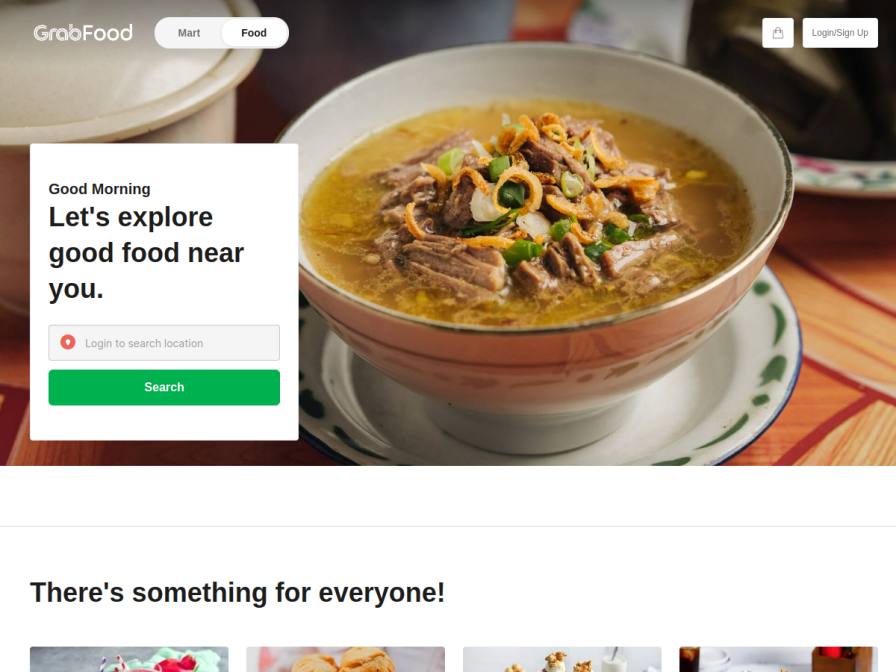
10 fictional AI personas. Exploratory perspectives, not a survey of real customers. Methodology & limitations
Simulated interest
AI synthesis, not measured demand
Suggested price range
No numeric price estimates in the answers. Ask a pricing follow-up to collect them.
Response sentiment
What this panel suggests
The answers describe a practical, reliability-first checklist when ordering on a delivery app. Before placing an order, respondents said they usually checked the estimated delivery time first, especially when they were ordering after work or needed food within a tight schedule. They also looked at whether their usual hawker or restaurant options were open, which suggests availability and timing mattered as much as menu choice. A second step was scanning recent reviews for signs of trouble, especially complaints about missing items, incorrect orders, or poor delivery performance. In that sense, reviews functioned less as general social proof and more as a quality-control filter. Promotions and free delivery were mentioned only as secondary considerations, not the main decision driver. Overall, the behavior sounds like a “minimize hassle” routine: people were trying to avoid late meals and disappointing order mistakes rather than searching broadly across the app. The batch does not quantify how common each check was, but the recurring pattern is clear: timing and reliability came before price or novelty.
Recurring themes
“I definitely checked the estimated delivery time, because, you know, I can't afford another late meal.”Read Annette Schowalter’s response →
“I also quickly scrolled through the reviews for the specific restaurant to see if anyone complained about missing items or incorrect orders recently.”Read Annette Schowalter’s response →
Objections to investigate
- Fear of Late Deliveries
- Risk of Incorrect Orders/Missing Items
Use these findings to plan customer interviews or experiments. How to interpret AI research
What the panel said
Click a name to open that persona’s full profile.
Annette SchowalterneutralOh, it was just last week, I think. Meetings ran really late, and I was starving. I hopped onto GrabFood, as usual. Before I placed the order, I definitely checked the estimated delivery time, because, you know, I can't afford another late meal. I also quickly scrolled through the reviews for the specific restaurant to see if anyone complained about missing items or incorrect orders recently. It's a bit of a habit now, trying to avoid those frustrations. Sometimes I’ll even quickly compare the delivery fees or look for promo codes if I have the time, but usually, it’s the delivery time and recent reviews that seal the deal for me.
海 成neutralWhen a sprint is running late, usually past 8 PM, I'll open GrabFood. My first step is always to check the ratings – I’m looking for a consistent 4.5 stars or higher. Then, I'll scan the recent reviews, specifically for comments about delivery times and order accuracy. If a place has a lot of complaints about late deliveries or incorrect orders, I'll immediately filter them out. I'm essentially looking for a reliable system, much like debugging code. I usually narrow it down to a shortlist of three highly-rated options before deciding.
Maria MedhurstneutralLast time I ordered from GrabFood, it was after a really late shift, probably around 11 pm. I was exhausted, so I just scrolled through what was available nearby. I usually check if there are any promotions first, maybe some free delivery offers because every bit helps with savings, you know. Then I look at the estimated delivery time – I can't stand waiting too long when I'm already tired and hungry. If the tracker has been off before, I get a bit worried. I also quickly scan the restaurant ratings and reviews, especially for new places, just to make sure it's not a gamble. Sometimes, if I'm really drained, I'll just pick something familiar.
Surya VarrierneutralThe last time I ordered, it was a weeknight, probably a Tuesday or Wednesday. My workday ran late, as usual, so by the time I got home, I was exhausted. I opened GrabFood, and honestly, I was just looking for something familiar. I often find myself indecisive when there are too many similar options, and I just want to get food to my door. So, I probably scanned for restaurants I've ordered from before, checking their ratings and maybe the delivery time if it was prominently displayed. I don't usually spend a lot of time deliberating; my priority is getting dinner without too much fuss, especially when I'm already tired.
翠 国荣neutralOh, the last time I used GrabFood? Probably last Tuesday. With my interviews back-to-back, I barely had time to breathe, let alone leave my desk. So, I opened the app, and the first thing I did was check the delivery time estimate. Since I was on a tight schedule, that’s super important. Then, I’d usually scroll through the reviews for the restaurants I was considering – I can’t afford a bad or delayed meal when I’m swamped. I also quickly compare prices for similar dishes, you know, to get the best deal. And, of course, I check if the restaurant is close by to minimize any potential delays. Oh, and sometimes I’ll look for promos or free delivery options too, if I have the time.
Jay O'KonneutralLast night, after a particularly long design review, I opened GrabFood. My usual routine involves a lot of scrolling – I'll filter by rating and check the estimated delivery times. I'm always looking for something that's not too heavy, given how late it gets. I also tend to compare a few different places before settling. It's a bit of a process, trying to balance convenience with reliability, especially after a draining day.
Roberta QuitzonneutralOh, the last time I ordered on GrabFood was probably after a really long marking session last week. I was so tired, I just wanted something quick and familiar. I remember I scrolled through the options, looking for something that wouldn't take too long to arrive, as sometimes they get a bit delayed on busy evenings, especially after school. I usually check if my usual hawker places are open and how long the delivery estimate is before I decide. I didn't really check much else, just wanted food!
Floyd JacobsneutralLast night, after a brutal day of meetings up north, I was starving and got home late. I opened GrabFood, and honestly, the first things I look at are the ratings and the estimated delivery time. I've had too many wrong orders or huge delays to just pick anything. If it's late, I'm already tired and hungry, and a screw-up just ruins the whole evening. I'm not going to risk it unless it's a place with consistently good reviews and a quick ETA.
米 燕neutralThe last time I ordered food on GrabFood, it was probably during a late shift. I usually check a few places before deciding. First, I look at the estimated delivery time, especially if I'm really hungry. Then, I’ll check the ratings and reviews to see what others are saying about the food and the delivery. I’ve had issues with late drop-offs and incorrect sides before, so I’m a bit more careful now. I also quickly scan the menu for familiar dishes, and if there are any promos, that’s a bonus, but not the deciding factor.
Ira GibsonneutralThe last time I ordered through an app, I spent ages comparing different places. I always check the estimated delivery time first, because I can't afford another late meal messing up my schedule. Then I'll look at the restaurant's rating and a few recent reviews, especially for any mention of accuracy or speed. I also check if they have the specific dishes I'm craving and if the total cost, including delivery fees, seems reasonable for what I'm getting. Sometimes I'll check for any available promotions too, but reliability is key.
Keep exploring.
Find your next question or see which topics divide AI panels.
What would you ask next?
Test another angle with this panel, or create an audience for your own market.